
What Custom Meat Processing Involves, From Drop-Off to Freezer
Quick Answer: Custom meat processing is the work of turning a whole animal into labeled, wrapped cuts made to your order. It runs through a set sequence: you schedule a slaughter or drop-off date, the carcass is chilled and hung to age, you fill out a cut sheet telling us how you want it broken down, then everything gets cut, ground, wrapped, sealed, and frozen for you to pick up. For a beef, expect the packaged weight to land around 60 to 65 percent of the hanging weight, and plan freezer space accordingly. The whole point is that you decide the cuts, the thickness, and the grind instead of taking whatever a case happens to hold.
Out here in ranch country, a lot of folks grow up eating beef they helped raise and never once think about the steps between the pasture and the plate. Then the day comes when you've got a steer ready, a buck in the truck, or a hog you split with a neighbor, and suddenly the question is real: what actually happens once you hand that animal over? We field that question every week from home cooks in Chugwater, ranchers hauling in from Wheatland and Douglas, and hunters coming down out of the hills before the weather turns. This walkthrough lays out the whole process, start to finish, in the same plain terms we'd use standing at the counter with you.
Scheduling and Drop-Off: Why Dates Matter
Custom processing starts long before a knife ever touches meat. It starts on a calendar.
Kill dates fill up fast
A butcher shop can only handle so many animals at once, since chilling and aging a carcass ties up cooler space for weeks. In our corner of Wyoming, fall tightens the calendar hard when hunting season and the end of grazing season collide, and ranchers and hunters show up in the same narrow window. Book ahead.
Live animals versus field-dressed game
How you bring the animal in changes the front end of the job. Beef, pork, lamb, yak, and bison usually arrive live, with slaughter happening on schedule. Wild game like deer, elk, and antelope comes in already field-dressed, and the clock started the moment it hit the ground. Driving in from Torrington or Scottsbluff? Keep it cold and get it to a shop the same day.
What we need to know up front
When you schedule, we'll want the basics: what animal, roughly how big, and whether it's a whole beef or a half or quarter split with family. We'll also ask how you like to eat, since that matters more than people expect. A household grilling steaks four nights a week wants a very different breakdown than one living on roasts, stew meat, and burger all winter.
Warning: Once a large animal is harvested, cold is not optional. Warm carcasses are where bacteria get their foothold, and no amount of skilled cutting later fixes meat that sat too warm too long. Whether it's a beef going to a shop or a deer riding home in your truck, keep it cold and keep it moving.
Warning: Once a large animal is harvested, cold is not optional. Warm carcasses are where bacteria get their foothold, and no amount of skilled cutting later fixes meat that sat too warm too long. Whether it's a beef going to a shop or a deer riding home in your truck, keep it cold and keep it moving.
Hanging and Dry-Aging: Where Flavor and Tenderness Happen
Fresh off the rail, beef is tough. The tenderness and depth of flavor that people prize come from time in a cold cooler, and this is one of the biggest reasons folks choose custom processing over a grocery case.
What aging actually does
After harvest, a carcass is chilled and hung. Over the next days and weeks, natural enzymes break down connective tissue while moisture leaves the surface, leaving meat noticeably more tender and richer-tasting. Most beef gets around two weeks of hanging time before it's broken down, though the exact window depends on the animal, the cooler conditions, and how you like your beef to eat.
Dry-aging versus the everyday hang
Long dry-aging, which crusts the carcass and concentrates flavor for weeks, happens in a tightly controlled, cold, steady cooler. Wild game follows the same principle: hang it cold, generally in the mid-30s Fahrenheit, and let it rest. Hunters who dry-age deer carefully call it the biggest upgrade to how venison eats. Push it too warm and you're spoiling, not aging.
Why hanging weight is the number to know
When your animal comes off the rail chilled, that's the hanging weight, the figure custom work gets tracked against. It's not what ends up in your freezer. Bone, trim, and fat come out during cutting, so packaged weight runs lower. Beef typically lands around 60 to 65 percent of hanging weight; pork runs higher, often low 70s. Know this ahead to keep freezer math honest.
The Cut Sheet: The Heart of Custom Work
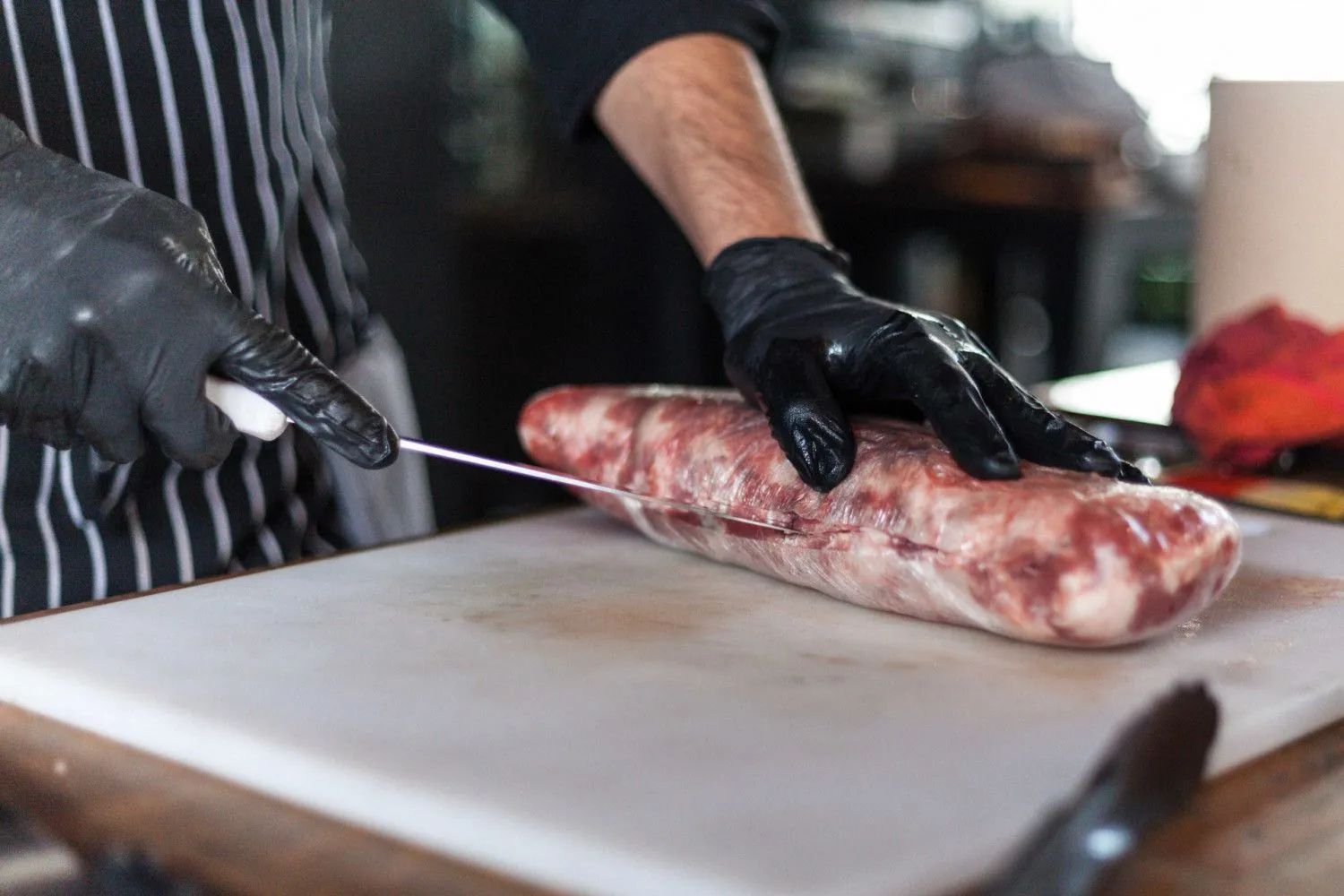
If there's one thing that separates custom meat processing from just buying meat, it's the cut sheet. This is the form where you tell us, cut by cut, exactly how you want your animal broken down. Get comfortable with it and you'll get a freezer full of meat that fits how your family actually cooks.
Steaks: thickness and count
You decide how thick your steaks are cut and how many go in each package. Folks cooking for two often want one or two per pack, so nothing thaws unused. A big family might want four or six. You also choose bone-in or boneless, which changes flavor and freezer stacking.
Roasts: size and how many
Chuck, round, and rump roasts get cut to the weight you want. Tell us your usual roast size, whether a small Sunday roast or a big one for a crowd, and we cut to match instead of leaving you to saw a frozen block in half later.
Ground beef: lean ratio and package size
A lot of an animal becomes ground, and you get a say in how lean it runs and how it's packaged, whether one-pound, two-pound packs, or chubs. Trim from leaner and fattier cuts gets blended to hit the mix you want for burgers, chili, and everyday cooking.
The extras that make it yours
Beyond the standard breakdown, custom processing turns parts of the animal into things you actually crave: sausage, brats, and specialty smoked items, plus soup bones, stew meat, short ribs, and organ meats. The chuck, rib, loin, round, brisket, and other primals each open different options — your cut sheet is where you claim them.
TIP: Before you fill out a cut sheet, spend a week noticing what you actually cook. If you never braise a roast but grill constantly, weight your order toward steaks and burger. The most common regret we hear isn't about a bad cut, it's about ordering cuts to match some ideal kitchen instead of the real one.
Wrapping, Sealing, and Freezing: Protecting the Work
A perfect cut ruined by freezer burn is a waste, so the back half of the job is all about protection and labeling.
Why the wrap matters
Freezer burn is just moisture leaving the meat's surface where air reaches it, turning good cuts gray, dry, and off-tasting. Cutting off air is the whole game. Custom shops use vacuum sealing to lock a tight barrier around each cut, or proper butcher-paper wrapping for certain items, so meat tastes the same all winter.
Labeling you can actually read
Every package gets marked with the cut and, commonly, the date. When your freezer holds a whole beef plus a couple of deer, clear labels keep you from playing frozen-brick roulette in February. Grouping like cuts together as they're packed makes the freezer easy to shop from all season.
Plan your freezer space
Bulk buying only works if the meat fits. As a rough guide, a quarter of beef needs four and a half to five and a half cubic feet, a half needs roughly eight, and a whole beef wants about sixteen. Sort out storage with family before pickup day, not after.
Wild Game: A Season of Its Own
Game processing carries its own rhythm, and hunters across southeast Wyoming, northern Colorado, and the Nebraska panhandle lean on custom shops to get it right.
Care in the field decides everything
The quality of your venison is mostly settled before the animal ever reaches a cooler. A clean field-dressing job, fast cooling, and keeping the meat free of hair, dirt, and gut contact all matter more than any cutting that comes later. Bring it in cool and clean and there's a lot a butcher can do with it.
From carcass to table
Wild game runs through the same core steps as domestic animals: hang and age where the carcass allows, break it down on a cut sheet, then wrap, seal, and freeze. Because game is lean, a lot of it gets turned into ground and sausage, and this is where a custom shop earns its keep, blending in the right amount of fat and seasoning to turn lean venison or antelope into brats, breakfast sausage, snack sticks, and burger that actually eats well.
Keep your animal yours
Plenty of hunters want their own animal back, cut the way they asked, and not mixed into a communal batch. That's a fair thing to ask about when you drop off, and it's a standard part of how careful custom work gets handled.
Frequently Asked Questions
How long does custom meat processing take from drop-off to pickup?
Plan on a couple of weeks minimum for beef, since aging alone runs about two weeks before cutting starts. Pork and game move faster with shorter aging windows. Fall rush can stretch the wait, so book early.
What's the difference between hanging weight and the meat I take home?
Hanging weight is the chilled carcass before cutting. Packaged weight is what goes in your freezer after bone, fat, and trim removal. Beef typically yields 60 to 65 percent, so a 700-pound hanging beef nets low-to-mid 400s in wrapped meat.
Do I have to know all the cuts before I fill out a cut sheet?
No, a good butcher walks you through it. Come in knowing how your family eats, whether you lean toward steaks, roasts, or burger, and package sizes. We translate that into a cut sheet without you memorizing primal cuts.
Can I get wild game and beef processed the same way?
Yes, both follow the same core steps of aging, cutting, wrapping, and freezing using a cut sheet. Game arrives field-dressed rather than harvested on-site, and since it's lean, more typically goes to ground meat and sausage.
How much freezer space do I need for a bulk order?
Roughly, a quarter of beef needs four and a half to five and a half cubic feet, a half needs about eight, and a whole beef needs sixteen. Sort freezer space before pickup, especially when splitting with family.
Why age meat at all instead of cutting it fresh?
Aging lets natural enzymes tenderize muscle and moisture leave the surface, deepening flavor. Fresh-cut beef off the rail tastes tougher and flatter than after a couple weeks in a cold cooler, making custom-processed beef noticeably better.
From Pasture to Freezer: A Process Worth Trusting
Custom meat processing isn't complicated once you see the shape of it: schedule, age, choose your cuts, then wrap and freeze. Every step exists so you end up with meat that fits your kitchen and holds well through a Wyoming winter, whether it started as a grass-finished steer, a hog raised down the road, or a buck packed out yourself. Over 3 years working out of Chugwater, Wyoming, the crew at Chug Springs Butchery has seen how much smoother the whole process runs once ranchers and hunters understand what's happening behind the counter.
None of it requires guesswork on your part. A little planning around dates, a clear sense of how your family cooks, and honest freezer math around hanging versus packaged weight go a long way. The animal does the hard work of growing well; the processing just needs to protect that effort, cut by cut, wrap by wrap, until it's sitting cold and labeled in your freezer, ready for whatever winter brings.